Structural Glass in Yacht Design: Pioneering Research at MULTI.engineering
Over the past four years, a groundbreaking research project has been underway at MULTI.engineering, exploring a new approach to yacht design and construction: using glass as a structural material. This initiative emerged from a growing demand in the superyacht industry for larger windows, a visually striking feature that offers passengers breathtaking panoramic views. The use of structural glass has the potential to increase the transparency of yachts significantly. This research was conducted in collaboration with Ghent University and Oceanco.
Challenge: from decorative panes to load-sharing components
The research aimed to tackle the challenges posed by this novel approach, with a particular focus on the effects of structural deformation and the load conditions unique to large yachts. A central theme was the method of connecting glass components to the yacht’s metallic structure. Traditionally, the glass panels in yacht windows are structurally isolated from the yacht’s structure to prevent load transfer from surrounding structure deformations. This is mainly due to the brittleness of glass and the risks of fracturing. However, this also means that as window sizes are increased, additional local structural reinforcement is necessary, potentially limiting design freedom due to the required supporting elements.
Academic backbone
To ensure scientific rigor, the research was conducted as a doctoral study at Ghent University, carried out by Danie Wium, one of MULTI.engineering’s designers. The project benefited from the university’s expertise, bridging two distinct fields: glass as a building material and yachtbuilding. The investigation was conducted across three design levels, related to the scale of yacht components: the global structure, the local structure, and connection details. At each level, valuable insights were obtained regarding the feasibility, performance, and design implications of integrating structural glass. This study focused on the structural integration of glass in yacht superstructures.
Global insights: expansive glazing with minimal impact on hull girder strength
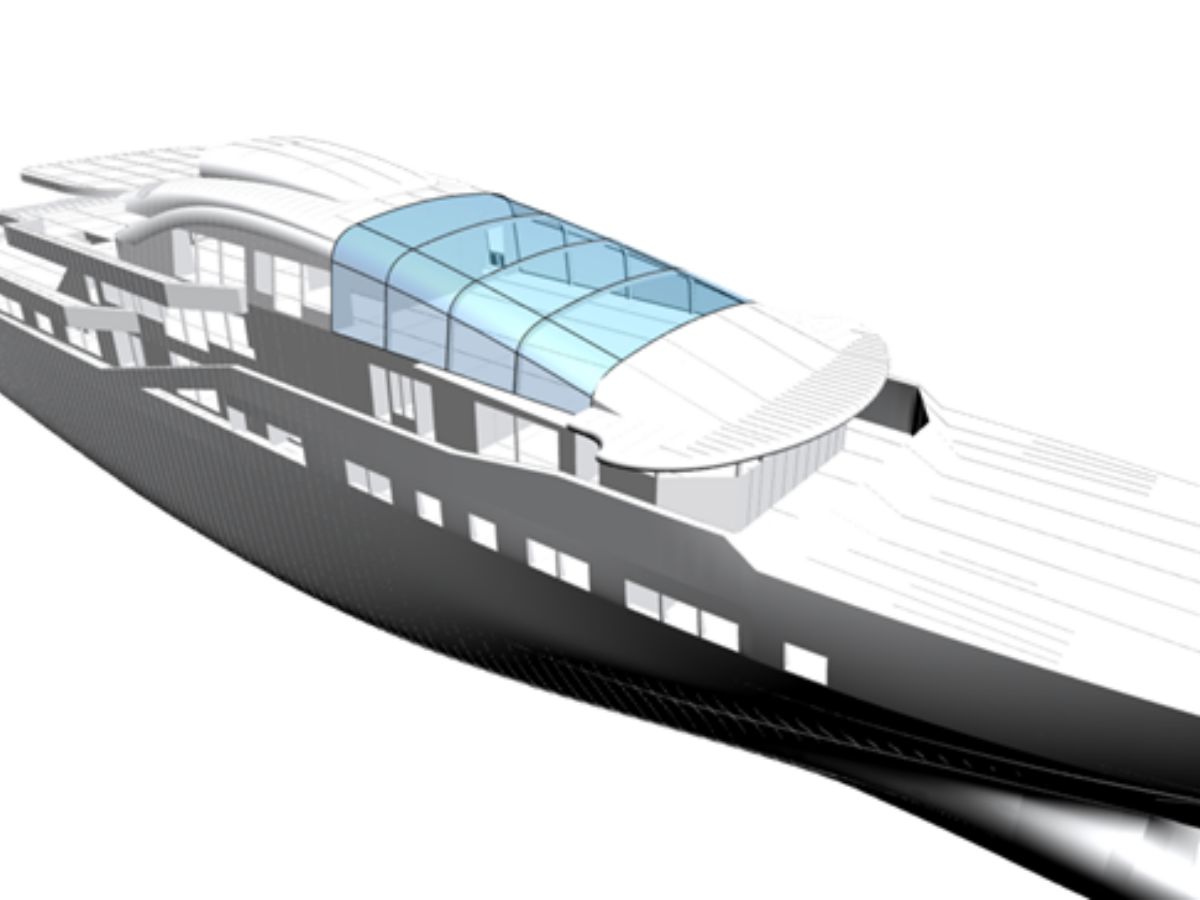
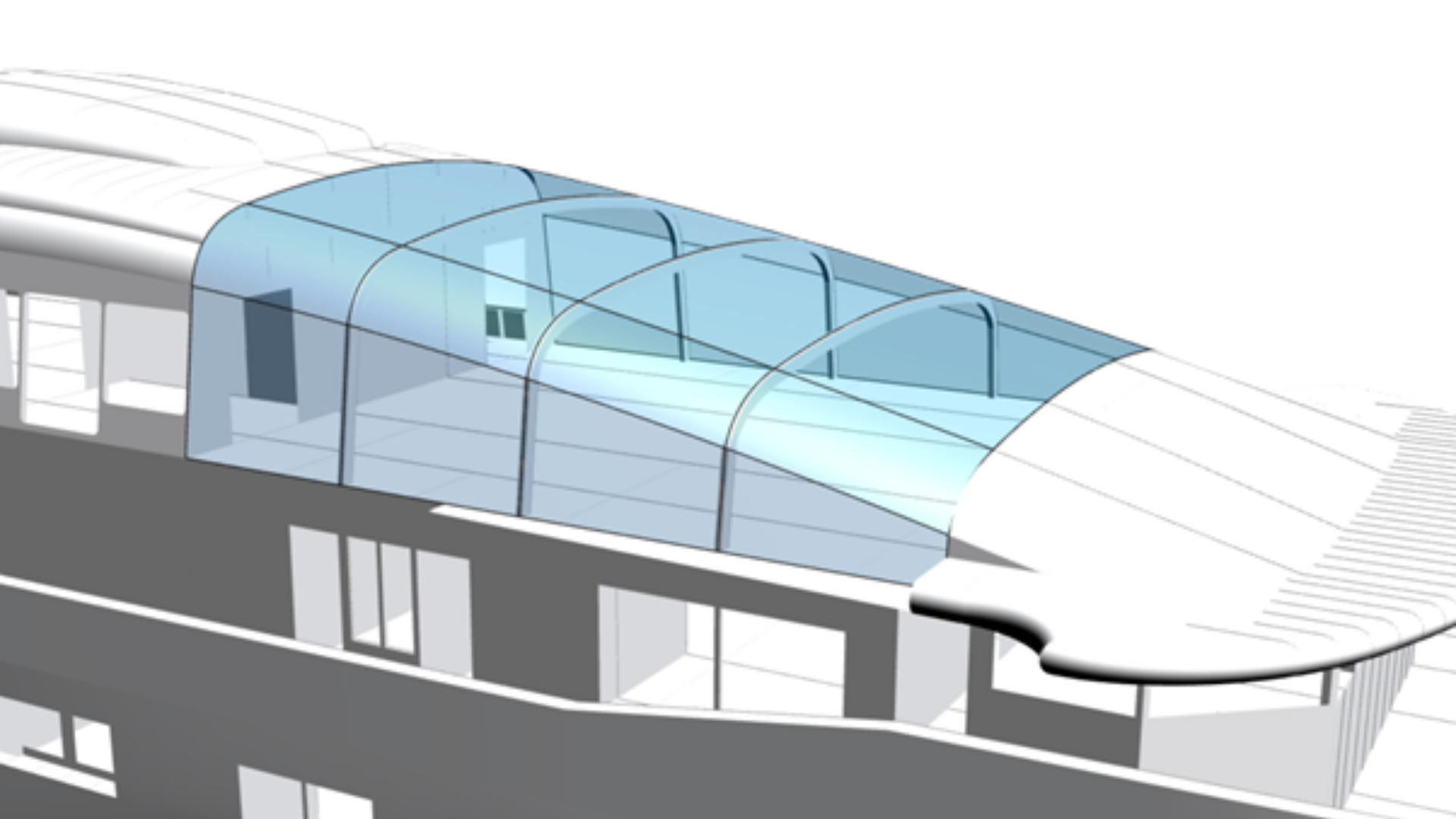
A representative yacht concept featuring a large glazed area was developed, significantly surpassing current glazing configurations, and investigated using the finite element method. Structural analysis under various global load cases showed that the glazed area has a minimal impact on the yacht’s longitudinal bending strength and can be largely isolated from global loading considerations. This supports the feasibility of expanding glazed surfaces in similar yacht designs, especially given the limited structural contribution of typical aluminium superstructures paired with steel hulls.
Local behaviour: tuning adhesive stiffness to harness the glass
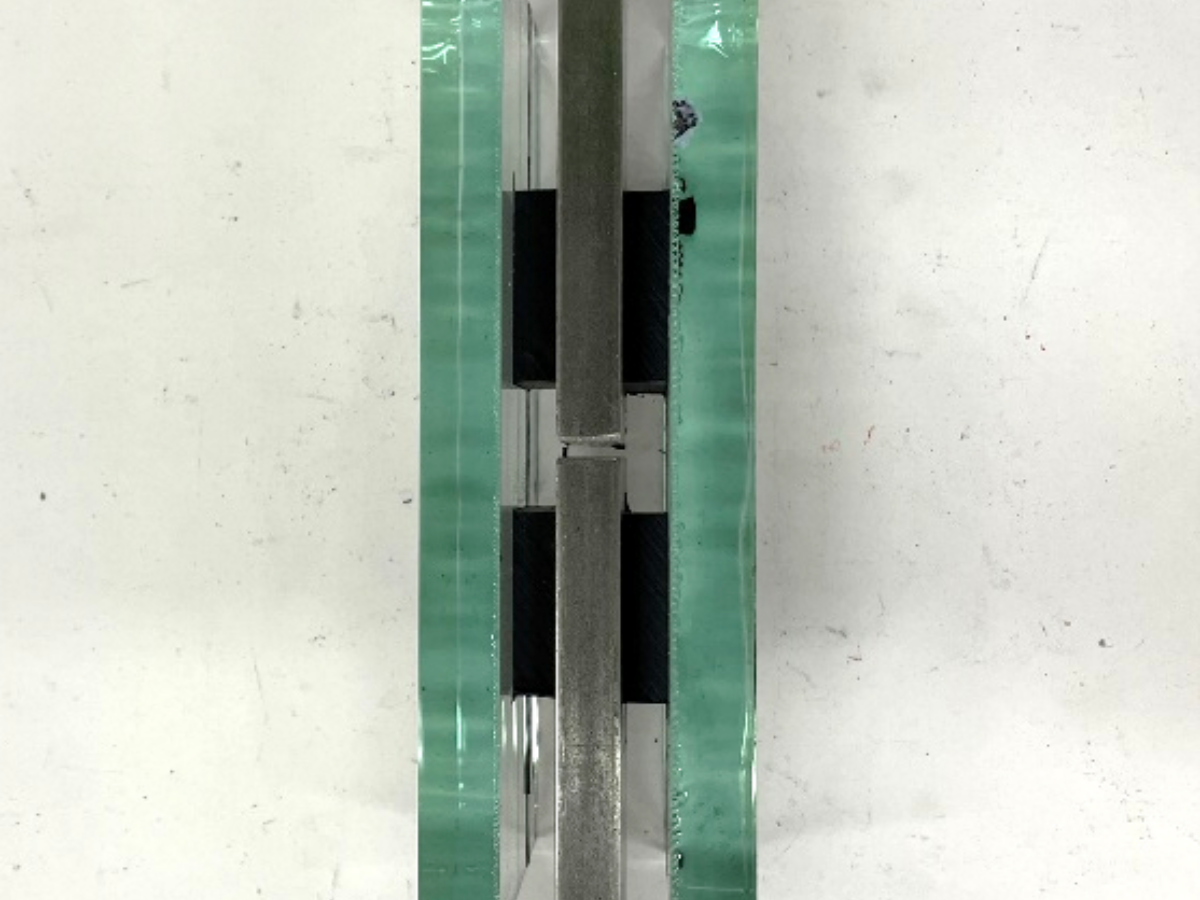
Local loads proved to have a significantly larger impact on the subcomponents of the glazed area. Parametric studies of the glazing structure were performed to identify suitable connection properties between the glass and metallic components. Structural adhesive bonding was simulated. These types of connections are novel in shipbuilding and have not been previously explored. The stiffness of the adhesive bonds was found to have a substantial influence on the deflections and stresses within the underlying structural components of the glazed area. The stiffer bonds enabled more effective load transfer between the glass and steel, allowing the glass panels to contribute meaningfully to the overall rigidity of the structure. This marks a significant departure from the conventional role of glass in typical window systems, where it primarily serves as a non-structural infill material. In this configuration, the glass panels act as integral structural components, enhancing both the stiffness and stability of the glazing structure.
Materials & durability: thick epoxy bonds under marine exposure
To gain a better understanding of these structural adhesive connections, the mechanical properties of an epoxy adhesive were tested experimentally. Unlike conventional epoxy applications, the epoxy was tested in relatively thick layers to accommodate geometric tolerances on the bonding surfaces. Additionally, its mechanical degradation was evaluated under prolonged exposure to high temperature and humidity, providing valuable insight into its long-term behaviour in a marine environment. It was concluded that while epoxies offer high-strength adhesion between glass and metallic components, several critical considerations must be taken into account, including their limited plastic deformation and sensitivity to environmental changes.
Design outcome: a practical framework for yacht teams
Based on the research findings and the lessons learned, a general framework for designing glass components in yachts was developed, providing a useful guide for yacht designers. The project has given MULTI.engineering a deeper understanding of the role and behavior of structural glass in large luxury yachts, providing a solid foundation for addressing key aspects related to its integration and function within a yacht’s structure.
Publications for further reading
The following publications were produced from this research:
- Structural integration of glass in yacht superstructures through adhesive bonding – A numerical analysis:
- http://dx.doi.org/10.1016/j.marstruc.2025.103834
- Mechanical behaviour and durability of an epoxy adhesive for structural glass-to-steel connections in a ship:
- http://dx.doi.org/10.1016/j.ijadhadh.2025.104050
- Experimental Work on Thick Epoxy Adhesive Bonds for Glass-Steel Joints in a Ship:
- https://proceedings.challengingglass.com/index.php/cgc/article/view/559
- Finite element analysis of a glass structure in a superyacht superstructure:
- http://dx.doi.org/10.1007/s40940-023-00240-1
- Considerations for the Integration of Glass in Superyacht Structures:
- https://doi.org/10.47982/cgc.8.442