Two perspectives, one vision: building digital twins at MULTI.engineering
Digital twin technology is rapidly changing how engineering teams design, test and optimise complex systems. At MULTI.engineering’s Design & Engineering Office, this evolution is driven not only by technology, but by collaboration between people with different backgrounds and levels of experience.
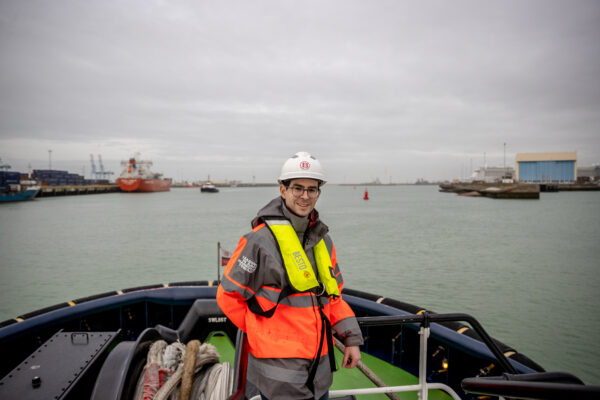
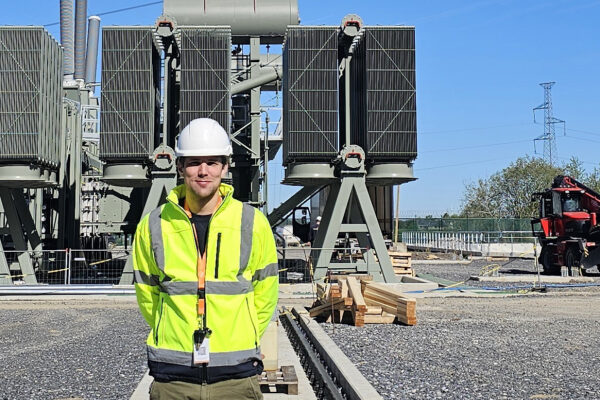
In this duo interview, Anıl Gürlek, Project Engineer, and Thomas Leniere, Junior Project Engineer, talk about their journeys at MULTI.engineering, how they work together on digital twin projects and why combining experience with fresh academic insight leads to better engineering outcomes.

Different paths, shared curiosity
Anıl has been with MULTI.engineering for more than two years. His workdays are anything but repetitive. “Every project is different”, he says. “Each one pushes me to learn new tools and new ways of thinking.” What he values just as much is the close cooperation within the Design & Engineering Office. Engineers from different disciplines work side by side, sharing knowledge and solving problems together.
Thomas’ journey at MULTI.engineering started as an intern. After returning to university to complete his studies in mechanical engineering, he came on board as a fulltime Junior Project Engineer. The transition felt smooth. “I already knew the people and the way of working”, he explains. “So instead of starting from zero, I could focus immediately on learning and contributing.”
Where experience and theory meet
Despite the difference in seniority, Anıl and Thomas quickly found common ground. Their collaboration thrives on contrast. Thomas often approaches challenges with a strong theoretical foundation and a desire to fully understand a problem. Anıl brings a more pragmatic mindset, shaped by project timelines, client expectations and practical constraints.
“At university, you’re trained to go as deep as possible”, Thomas says. “But in real projects, you have to ask yourself how much detail is actually needed.” Anil helps him make that judgement. “You learn where to draw the line”, Thomas adds. “That balance is something you only really pick up in practice.”
Learning by doing: the LNG gasification simulator
Their different approaches came together in a recent LNG gasification simulator project. LNG vessels are complex, high-risk and extremely costly. Testing system changes on a real ship is simply not an option.
“I tend to be more conservative”, Anıl explains. “You can’t always solve everything in the most detailed way. Time and resources matter.” Thomas initially wanted to dig deeper into the root of every issue. Instead of choosing one approach over the other, they combined them.
“We found a middle ground”, Anıl says. “In the end, the model became less complex, but more efficient and more reliable.” For Thomas, the project was a turning point. “It showed me how important it is to focus on what really adds value for the client.”
Why digital twins make the difference
Both engineers are clear about the value of digital twins. In a virtual environment, engineers can simulate, test and optimise systems without real-world consequences. “You can explore scenarios that would be too risky or too expensive in reality”, Thomas explains. “And you’re not limited by real time. You can simulate years of behaviour in minutes.”
For Anıl, that advantage is crucial in the maritime sector. “Interrupting the operation of an LNG vessel could cost millions”, he says. “With a digital twin, you can test extreme situations safely. Nothing breaks, nothing explodes in real life.”
Making complexity visible
Digital twins don’t just benefit engineers. They also change how projects are discussed with clients. Instead of abstract calculations, clients can see and interact with a visual model of their system.
“It makes conversations with them much clearer”, says Thomas. “You’re not just talking about numbers anymore, you’re showing how the system behaves.” According to Anıl, this shared visual language helps align expectations and supports better, data-driven decisions throughout a project.
Learning goes both ways
Working with digital twins means constantly keeping up with new technologies. Thomas learns from Anıl how to judge when a model is “good enough” for its purpose. Anıl, in turn, values the fresh perspectives younger colleagues bring.
“Small brainstorms and discussions keep you sharp”, he says. “This field evolves so fast that learning from each other is essential.”
Looking ahead
Both see digital twins playing an even bigger role in the future of MULTI.engineering. From concept design to construction, operation and lifecycle management, digital twins are expected to support decisions throughout the entire lifespan of a vessel.
Predictive maintenance is a key area. By combining real-time sensor data with digital models, future failures can be anticipated rather than reacted to. Autonomous vessels are another emerging application, where digital twins will help monitor system health when fewer people are onboard.
“Digital twins allow you to make better-informed choices”, Thomas concludes. “You can test more options, compare outcomes and validate decisions with data.”
Work that matters
When asked which project they are most proud of, Thomas points to the digital twin for propulsion configuration selection that he developed during his internship. “It’s still being used and expanded”, he says. “That makes you feel like your work really mattered.”
For Anıl, the LNG project stands out. “It was complex and challenging”, he reflects. “But it gave us valuable knowledge that will shape future projects.”
Digital twins are not just about technology. They are about combining different perspectives to make better engineering decisions